Showing posts with label conference. Show all posts

Sunday, February 12, 2012

Conference Call for Papers: Ukrainian and Jewish Artistic and Architectural Milieus of Lwow...

Call for Papers

L'viv, Ukraine. Tzori Gilod Synagogue. Ceiling/wall painting, dtl.  (before 'restoration').  Photo: Samuel D. Gruber (2006)

The Ukrainian and Jewish Artistic and Architectural Milieus of  Lwow/Lemberg/Lviv

International Conference, to be held in Lviv, Ukraine, on November 5-7, 2012,
organized by:

Center for Urban History of East Central Europe (Lviv, Ukraine)
Center for Jewish Art, Hebrew University of Jerusalem (Jerusalem, Israel)
Polish Institute of World Art Studies (Warsaw, Poland)
The Leonid Nevzlin Research Center for Russian and East European Jewry (Jerusalem, Israel)
Ukrainian Jewish Encounter Initiative (Toronto, Canada)

The following call for papers is posted by the organizers:

The period between Ausgleich and Holocaust (1867-1939) witnessed the rapid modernization of Galicia, and especially its metropolis, Lwow/Lemberg/Lviv. Citizens of the Austro-Hungarian Monarchy, and then of the Second Polish  Republic headed in a diversity of paths, leading from the segregated traditional societies towards the modern integrated one, and at the same time, to a number of nationalist perspectives. These uneasy political and cultural conditions presented challenges for every group, and especially for their creative individuals, the artists.

L'viv, Ukraine. The Temple Synagogue (from postcard).  Liwicki, architect (1840-46).

The conference focuses on artists and architects, who defined themselves or were defined as Ukrainians and Jews, and thus were the representatives of the two largest non-dominant groups in Lviv before World War II. Their modern identities were shaped, in respect or contrast to, but almost always in the context of the Polish dominance in the city, and - from the last third of the nineteenth century - in the context of Polish national resurgence.

Ukrainian and Jewish artists were haunted by stereotypical views and self-views, both similar and dissimilar: while none of them had had any "national art," the former were known as indigenous builders and artisans, though confined to the peasant's background, the latter as "an artless people," "isolated in ghetto for centuries."  For some artists it was an existential choice to acknowledge or oppose the stereotypes. Another artists' challenge was the ubiquitous modernization, reflected in the diversity of  available concepts, whether evolutionist, "renaissance," or revolutionary. How artists constructed their artworks, their selves, and their group affiliations in relation to this changing world and specific urban environment, will be the topics of the conference.

 L'viv, Ukraine. The Jewish Hospital, dtl. of dome.  Kazimierz Moklowski, arch. (1898-1902).  Photo: Samuel D. Gruber (2006)

We invite scholars to present their studies of artistic and professional strategies within the highly prolific Ukrainian and Jewish communities  of artists and architects.  We invite papers questioning how artists and architects articulated their belonging to different groups, how this influenced their work and their social position, how interaction with other artists in the multi-ethnic environment of the city have influenced ideas and concepts of art and its role in society.

Moreover, we would like to learn how the social position and perception of artists and architects varied in different ethnic communities, and how they changed over time. While individual papers may only focus on the artistic life and architectural practices within one community, Ukrainian or Jewish, we aim to bring a comparative perspective by inviting scholars to discuss narratives and strategies of these two groups together.

We hope for insights in three chief directions: making and socializing the art; retaining, constructing, and re-constructing bonds with the ethnic-religious groups; shaping the cultural elites by non-dominant groups.We also invite papers dealing with the question of interaction between the urban environment and artistic milieus. Inquiries into the role of Lwow/Lemberg/Lviv, but also perceptions and reflections of the city by  Jewish and Ukrainian artists and architects are thus especially encouraged.

The conference participants are encouraged to discuss a broad variety of
matters concerning creative individuals and groups, including, but not limited to:

1.    Emancipation and education: artists, architects, and engineers.
2.    Individual professional activity and career: graphical arts, painting, sculpture, photograph, decorative art, architecture and engineering; interaction of arts; religious and secular art; funerary art.
3.    Architectural presence and visibility in the cityscape: representation of minority in modern city; leaving and retaining the frameworks of the traditional environment.
4.    Education in traditional arts and crafts. Individual and group
reaction to the numerus clausus restrictions.
5.    Defining and shaping heritage: documentation, preservation, and promotion of landmarks
6.    Artistic and professional milieus of a non-dominant group: professional unions; associations; exhibitions; competitions; art critics; press.
7.    Supportive communities: welfare and social care, from orphanages to academic houses and spas.
8.    Art collecting and patronage. Private collectors. Jewish Museum and National Ukrainian Museum. Libraries.
9.    Circles of identities: local, imperial, national, and universal identity. Loyalty and nationalism in art.
10.    Relations with the "others": tutorship, co-operation, sympathy, competition, and separation.
11.    Prejudices in the realm of art, architecture and beyond: anti-Semitism, ethnic and religious discrimination.
12.    Constructing "national styles": defining Jewish and Ukrainian art and architecture.
13.     Destiny of Jewish artists and their works in Holocaust. Ukrainian artists and architects in the wars and under occupations: World Wars I and II.
14.     Post-Lviv/Lemberg/Lwow stories: artists and architects outside of Lviv.

Languages of the conference: English and Ukrainian.

Abstracts (up to 200 words) of a twenty-minute presentation with a short CV should be submitted (as an attached MSWord documents) by April 1, 2012 to Dr. Iryna Matsevko, the Academic Coordinator of the Center for Urban History at i.matsevko@lvivcenter.org, with "Conference" in the subject header.

Applicants will be notified of the decision regarding their proposals by May 1, 2012.

Limited funds for reimbursement of travel expenses and accommodation are
available. No conference fee will be charged.

Symposium: The Art of Being Jewish in the City

This will surely be a day of interesting discussion...unfortunately the schedule doesn't go into more detail about specific topics.

THE ART OF BEING JEWISH IN THE CITY
Thursday, March 15, 2012

Edward H. Rosen Hillel Center
Temple University (Philadelphia)
1441 Norris (corner of N. 15th Street)
Philadelphia, PA 19122

A day-long symposium exploring arts-led urban development and the role that Jews play in envisioning new forms of urban life. Free and open to the public.

Temple University's Feinstein Center for American Jewish History brings together scholars and urban practitioners to consider the public and private forces that shape urban art and culture. The culminating event of two years of programming on "Jews and the American City," this symposium invites the public to join in conversation with some of the most important urban thinkers today. How are Jews imagining, funding, and creating urban arts and culture for the future?

SCHEDULE

9:00 a.m. - 9:30 a.m.
Registration and breakfast

9:30 a.m. - 9:45 a.m.
Opening Remarks, Lila Corwin Berman, Director of the Feinstein Center and Murray Friedman Professor of American Jewish History, Temple University

9:45 a.m. - 11:45 a.m.
Jewish Centers of Urban Arts and Culture
  • Elise Bernhardt, President and CEO, Foundation for Jewish Culture
  • Rachel Chanoff, Founder and Director, THE OFFICE performing arts + film, and Artistic Director, Celebrate Brooklyn!
  • Daniel Belasco, Henry J. Leir Associate Curator, The Jewish Museum of New York
  • Dan Friedman, Arts and Culture Editor, the Forward
  • Dan Schifrin, Director of Public Programs and Writer-in-Residence, Contemporary Jewish Museum
  • Julia Foulkes, Associate Professor of History, The New School, and author of To the City: Urban Photographs of the New Deal (2010)
  • MODERATORS: Warren Hoffman, Director of Arts and Cultural Programming, the Gershman Y, and Josh Perelman, Chief Curator and Director of Exhibitions and Collections, National Museum of American Jewish Histor
1:00 p.m. - 3:00 p.m.  
Private Funds and Public Urban Missions
  • Andrew Eisenstein, Managing Director of Ironstone Strategic Capital Partners and real estate developer
  • Jeremy Nowak, President, William Penn Foundation, and former CEO, The Reinvestment Fund
  • Zannah Mass, Director, Brooklyn Creative Lab, and former Cultural Affairs Director, Two Trees Management Company, and General Manager, St. Ann's Warehouse
  • Michael Royce, Executive Director, New York Foundation for the Arts
  • Sharon Zukin, Professor of Sociology, Brooklyn College and City University Graduate Center, and author of Naked City: The Death and Life of Authentic Urban Places (2010)
  • MODERATOR: Bryant Simon, Professor of History, Temple Universit
3:15 p.m. - 5:15 p.m.  
Visions of a City and Its Public Meaning
  • Cara Schneider, Media Relations Director, Greater Philadelphia Tourism Marketing Corporation
  • Alan Greenberger, Deputy Mayor for Economic Development and Director of Commerce, City of Philadelphia
  • Mark Oppenheimer, Author of the Beliefs column for the New York Times, and Director, Yale Journalism Initiative
  • Jane Golden, Executive Director, Mural Arts Program
  • MODERATORS: Carolyn Adams, Professor of Geography and Urban Studies, Temple University, and Beth Wenger, Professor of History, University of Pennsylvania
For a full program and to register, visit:

Monday, December 12, 2011

Conference Session: From Historicism to Deconstructivism: Reconsidering European Synagogue Architecture

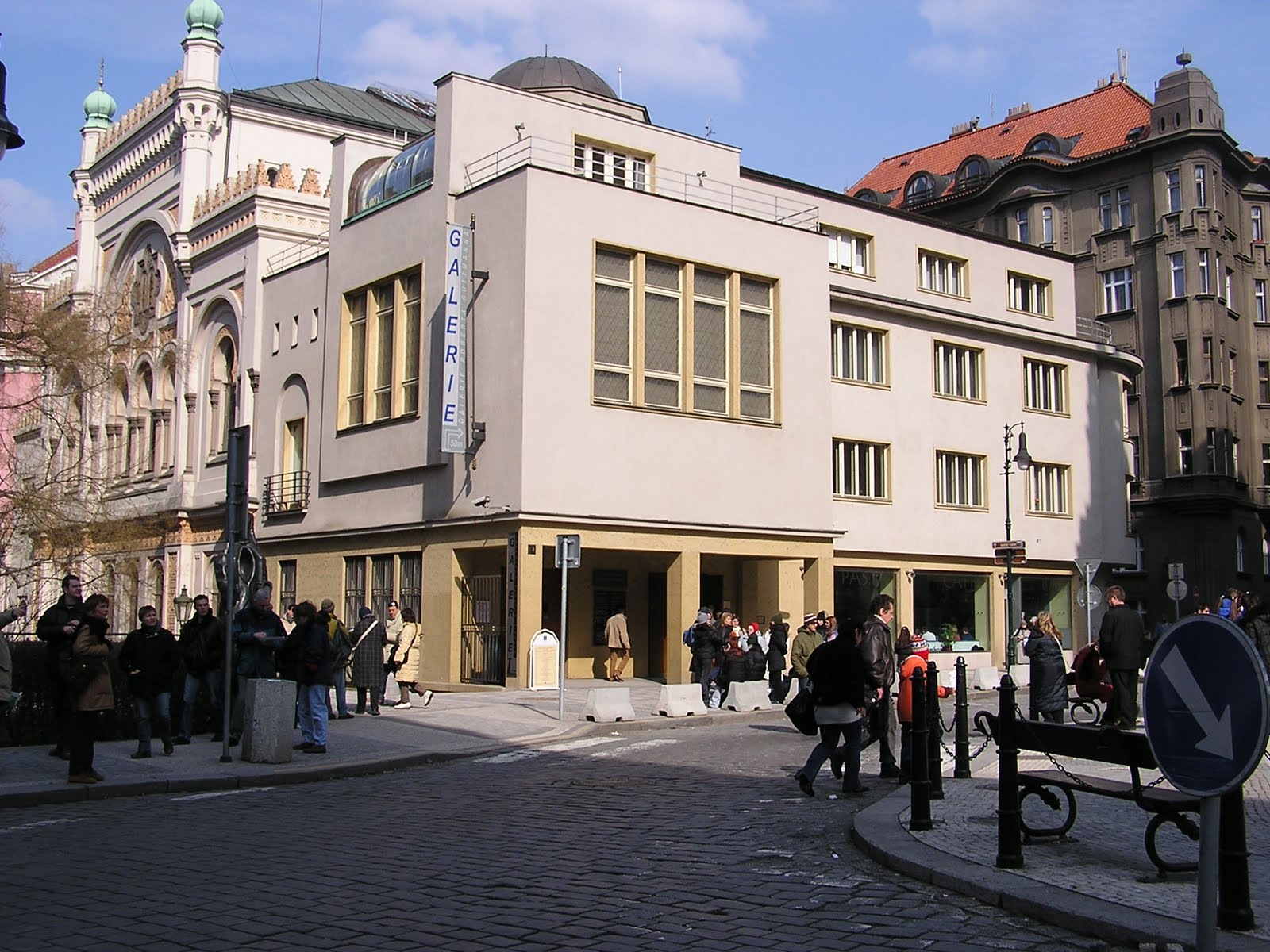
Prague, Czech Rep. Spanish Synagogue addition. Karel Pecanek, arch. (1935). Photo: Samuel D. Gruber

Brno, Czech Rep. Agudas Ahim Synagogue, Brno. Otto Eisler, arch. (1936). Photo: Samuel D. Gruber (2004).

Nis, Serbia. Former Synagogue. 1920s? Photo: Veljko N.

Leeds, England. Former Leeds New Synagogue. J. Stanley Wright, arch. (1929-1932). Photo: Samuel D. Gruber (2003).

Conference Session: From Historicism to Deconstructivism: Reconsidering European Synagogue Architecture
by Samuel D. Gruber

Next week I'll be at the annual meeting of the Association for Jewish Studies in Washington, D.C. to give a paper in the session "From Historicism to Deconstructivism: Reconsidering European Synagogue Architecture." Michael Meng and Gav Rosenfeld, both of whom have new books out, will also be on the panel - so I guess we are reprising our act from last year's AJS, though with slightly new topics.

My paper "What Was New and Why? Synagogue Modernisms in Pre-Holocaust Europe," is, in fact, the prequel to last's years presentation, in which I described the role of refugee and Survivor architects in shaping the modern Jewish aesthetic in post-WWII America. This year I'll talk about the architecture they left behind - the many modernisms of the early 20th century and especially the interwar years. Thanks to the documentation of previously forgotten synagogues by many researchers in different countries, we can now see the broad outlines of the fertile and popular modern movements before the Holocaust.

Budapest, Hungary. Heros’ Syn. Lazlo Vago & Ferenc Farago, archs. (1929-31). Photo: Samuel D. Gruber.


Zilina, Slovakia. Neolog synagogue. Peter Behrens, arch. (1928-30). Photo: Samuel D. Gruber.

Schedule Information:
Mon, Dec 19 - 8:30am - 10:30am
Building/Room: Grand Hyatt Washington, Penn A

From Historicism to Deconstructivism: Reconsidering European Synagogue Architecture
Session Participants:
Chair: Michael Meng (Clemson University
"If Only It Were “As Simple As Bonjour”: Synagogue Building in Nineteenth-Century Paris," Saskia Coenen Snyder (University of South Carolina)
"What Was New and Why? Synagogue Modernisms in Pre-Holocaust Europe,
Samuel D. Gruber (Syracuse University)
"“Between Memory and Normalcy: Synagogue Architecture in Postwar Germany,”
Gavriel Rosenfeld (Fairfield University)
Respondent: Michael Meng (Clemson University)

Abstract:
The scholarly literature on Jewish architecture has long been dominated by analyses of synagogue design. In recent years, however, the focus of this literature has begun to change. If prior scholarship concentrated on the construction histories of synagogues, newer studies have begun to take interest in their reception histories as well. This panel follows in the spirit of this new scholarly approach by going beyond construction technique, style, and aesthetics to probe the wider social perceptions of, and reactions to, Jewish synagogues in the communities where they were built. Covering trends from the 19th to the 21st centuries, the three papers discuss how different styles of synagogue design – historicism, modernism, and postmodernism – reveal the interplay between architecture, on the one hand, and Jewish history, memory, and identity on the other. Saskia Coenen Snyder’s paper, “If Only It Were “As Simple As Bonjour”: Synagogue Building in Nineteenth-Century Paris,” investigates the relationship between Jewish building committee members and French political institutions during the Second Empire and the Third Republic. She argues that as synagogues became public buildings, municipal authorities played an increasingly intimate role in the construction process and public representation of Judaism. Samuel Gruber’s paper, “What's New and Why? Synagogue Modernisms in Pre-Holocaust Europe,” focuses on the variety of what was considered new and modern in Jewish architecture in the early 20th century Europe, and especially following World War I. The paper considers the role of architecture in furthering Orthodoxy, Zionism, nationalism, and other disputed religious, political, social and aesthetic movements. Gavriel D. Rosenfeld’s paper, “Between Memory and Normalcy: Synagogue Architecture in Postwar Germany,” discusses three phases of synagogue design in the Federal Republic of Germany between 1945 and the present. He shows how modernist, postmodern, and deconstructivist designs have grappled to varying degrees with the legacy of the Holocaust and how postwar German synagogues collectively reflect lingering uncertainty among German Jews about the extent to which they should remember the Nazi past or move beyond it towards a normalized future.

Wednesday, November 2, 2011

Call for Papers: Ars Judaica Conference

Call for Papers: “Ars Judaica” Conference

TRADITIONS AND PERSPECTIVES IN HISTORY OF JEWISH ART

Bar-Ilan University, Israel, September 10–13, 2012.

The conference will bring together historians of art and material culture and researchers in history, religions, semiotics, psychology, sociology, and folklore to explore the fields of interest of “Ars Judaica – The Bar-Ilan Journal of Jewish Art” that include, but are not limited to: - The Jewish contribution to the visual arts and culture from antiquity to the present; - Art and architecture of Jewish sacred spaces; - Biblical texts as a source in Christian and Muslim visual arts;- Jerusalem and the Holy Land as an object and model in visual arts;- Images of Jews in visual arts;- Hebrew script in visual arts;- Patrons, collectors and museums of Jewish art;- Jews, arts and politics.

Abstracts (limited to 200 words) of twenty-minute presentations with a short CV should be submitted (as attached MSWord documents) by JANUARY 6, 2012 to gr.ajudaica@biu.ac.il.

The applicants will be notified of the decision regarding their proposal by February 6, 2012

Thursday, October 13, 2011

Call for Graduate Student Papers: "Jewish Spaces, Jewish Places," Graduate Student Conference, Carleton University, February 2012

Call for Graduate Student Papers: "Jewish Spaces, Jewish Places," Graduate Student Conference, Carleton University, February 2012

The Second Annual Interdisciplinary Graduate Student Conference in Jewish Studies at the Max and Tessie Zelikovitz Centre for Jewish Studies, Carleton University, Ottawa
will be held February 9, 2012, on the topic "Jewish Spaces, Jewish Places."

Michael Meng of Clemson University, with whom I participated in a session at last year's AJS conference, will be the keynote speaker.

Papers are sought from graduate students at any university working on research projects in Jewish Studies in any field or discipline. According to the organizers
"The conference aims to explore the plurality and diversity of Jewish spaces and places, past and present, and we are particularly interested in papers that focus on the socio-cultural processes of how Jews construct space and/or mark place.

Possible themes include:

-processes of making place and performing space

-space, place and identity
-gendered spaces
-diasporic spaces and spaces of migration
-negotiating Jewish and non-Jewish spaces
-spaces of remembrance and commemoration
-Holocaust sites in history and memory
-public spaces and private spaces
-secular spaces and religious spaces
-spaces of community

Dr. Michael Meng, Assistant Professor of History at Clemson University and author of Shattered Spaces: Encountering Jewish Ruins in Postwar Germany and Poland (Harvard University Press, forthcoming, Fall 2011), will present a keynote lecture. Professor Meng's visit is co-sponsored by the Campus Outreach Lecture Program of the United States Holocaust Memorial Museum's Center for Advanced Holocaust Studies.


The conference will also coincide with a travelling exhibit "Names Instead of Numbers," which will be hosted by the History Department with the support of the Zelikovitz Centre at Carleton during the month of February. The exhibit highlights the biographies of twenty-two prisoners of the former Dachau concentration camp, drawn from the Dachau Remembrance Book project. The Remembrance Book project is a collaboration of several non-profit organizations to document the biographies of former camp inmates. Students, adults and relatives of former prisoners participated in the project of reconstructing and commemorating prisoners' life stories.=20


Papers should be 15-20 minutes long. Please send a 300-word abstract and a brief biography to:
zelikovitz.centre@gmail.com. Please also indicate in your proposal if you will be requiring any audio-visual needs for your presentation.

Proposals are due November 10, 2011.

Thursday, June 30, 2011

Germany: Colloquium on Cologne Jewish Quarter and Synagogue Excavation Results

Cologne, Germany. Detail from early phase of synagogue excavation. Photo: Samuel Gruber (2007).

Cologne, Germany. Medieval mikveh, looking up towards superstructure. Photo: Samuel Gruber (2007).

Germany: Colloquium on Cologne Jewish Quarter and Synagogue Excavation Results
by Samuel D. Gruber

I am very excited to be attending next weeks colloquium in Cologne, Germany, where the results of the recent and extensive excavations of the town hall square will be presented and discussed in detail. I first visited the excavation of the medieval synagogue in 2007 and most recently reported on the remarkable finds from this dig earlier this spring. I am thankful to the City of Cologne for inviting me to attend and participate. Together with the recent excavations in Lorca, Spain, the Cologne excavation is probably the more important work of "Jewish archaeology" of the past decade. Even though the site had been partially excavated in the 1950s, the finds really present an entirely new picture of Jewish history and community in Cologne.

I plan on writing some detailed articles from this meeting after the work is fully presented. In the meantime, here is the working schedule of the event.


Cologne, Germany. Hypothetical reconstruction of facade of ancient synagogue by Sven Schütte, published before recent excavations. Will now surely be modified,

THE EXCAVATIONS ON COLOGNE TOWN HALL SQUARE RESULTS


Colloquium July 6th/7th 2011
Cologne, Historisches Rathaus, Spanischer Bau, Ratssaal

Simultaneous translation in ENGLISH available for the whole congress!

For first Information please visit the English version [press „en“ ]
of our Website:
www.museenkoeln.de/archaeologische-zone

WEDNESDAY 6.7.2011

8.30 am Opening of Congress office - Spanish Building, Court
9.00 am Welcome
Jürgen Roters, Lord Mayor of the City of Cologne
Introduction into the Subject
Prof. Georg Quander, Head of the Department of Culture

SECTION: ANTIQUITY, EARLY MIDDLE AGES AND CONTINUITY


9.30 – 12.00 am
Sven Schütte, The Area in Antiquity
Marko Hocke, An Roman Architectural Model
Christos Vangelzikis, The Roman Thermal and their walls with stamped bricks
Marianne Gechter, the Written Sources from Antiquity to Middle Ages
Sven Schütte/Marianne Gechter, the Question of Continuity
Discussion / Moderation: Ulrich Klein

12.00 – 13.30 Lunch break (Opportunity to visit the Excavations)

SECTION JEWISH HISTORY I


13.30 – 17.30 pm
Marianne Gechter, Written Sources of the Medieval Jewish Community in Cologne
Sven Schütte, The Medieval Area around the Town Hall and it’s Phases
Ulrike Nusch-Schikowski, The different tiled floors of the Synagogue

15.00 pm – 15.30 pm Coffee break
Hubert Berke, Kosher Cuisine and Auerochses – The Archaeozoological research
Sven Schütte, The Infrastructure of the Jewish Quarter
Marianne Gechter, Written Sources for the Topography until 1349
Katja Kliemann, The Ashes of the Pogrom 1349 and their distribution in the Jewish Quarter
(Opportunity to visit the Excavations until 18.30 pm)

19.00 Evening Lecture , Historisches Rathaus, Hansasaal
Ernst Baltrusch, Constantine The Great and the Rescript of 321. Antijewish Predjudice or Religious Tolerance?

THURSDAY 7.7.2011

SECTION JEWISH HISTORY II / THE LATER HISTORY OF THE QUARTER

9.00am – 12.00 noon
Michael Wiehen, Latest Research on the Cologne Mikveh
Katja Kliemann, Ceramics and Stratigraphy – an overview
Elisabeth Hollender, The Epigraphic Finds from the Cologne Synagogue from 1349
Elisabeth Hollender, An Oldjiddish Text from the Cologne Synagogue

Discussion / Moderation: Johannes Heil

10.00am – 10.30 Coffee break

Marianne Gechter, The written Sources 1349 – 1424
Sven Schütte, The medieval Town hall and the Town Councils Chapel
Marianne Gechter, The written sources fort the Cologne Goldsmith’s Quarter
Sven Schütte, Cologne Goldsmith’s Quarter and its buildings
Sven Schütte, An Imperial Earring of the 10th century

Discussion / Moderation: Norbert Nussbaum

12.00 – 13.30 Conclusion /Perspectives
Sven Schütte, Colonia Archaeologica – Archaeological Zone and Jewish Museum – The Concept of the new Museum

Max Polonovski, A Future for the Past? Colognes Jewish Heritage in the 21st century –
Conclusion Discussion / Moderation: Johannes Heil

For Contact please do not hesitate to contact MARTINA HEMMERLING
0049 221 221 33422

Thursday, May 19, 2011

Conference: Mikveh: Space, Function, Law and Motive in Wroclaw, Poland.

Cologne, Germany. Mikveh. Parts of the mikveh date at least to the 9th century. Most of the impressive structure visible today was rebuilt during the Romanesque period. Photo: Samuel Gruber 2007.

Mikveh. Mss. illustration. German, c. 1428. Hamburg Staats und Universitatsbibliothek, Codex hebr 37 folio 79, verso, dtl. This is one of the earliest (the earliest?) known representation of a mikveh.

Conference: Mikveh: Space, Function, Law and Motive
in Wroclaw, Poland.

The 8th Wroclaw Conference in Jewish Studies is devoted to the them Mikveh: Space, Function, Law and Motive and will take place on May 25th-26th, 2011.

The conference is organized by the Jewish Studies Department of the Wroclaw University . The aim of the conference is to initiate interdisciplinary studies on the mikvah understood as a cultural and architectural space, connected with the tradition as well as the religious and state law. For more information please visit the website of the Jewish Studies Department of the Wroclaw University http://www.judaistyka.uni.wroc.pl/judaistyka

Siracusa (Sicily), Italy. Mikveh. Photo: Alberto Jona Falco in A. Sacerdoti, Guide to Jewish Italy.

Boskovice, Czech Rep. Mikveh in house basement across from synagogue. Photo: Samuel Gruber (2004)

Cleveland, Ohio (USA). Former mikveh, Morrison Ave. now Morrison Ave. Missionary Baptist Church, built 1925. Photo: Samuel Gruber (1997).

The conference language is Polish. Here is the schedule.

Conference Program (in Polish)

VIII Wrocławska Konferencja Judaistyczna
Mykwa – przestrzeń, funkcja, prawo i motyw


25 V 2011 (Instytut Filologii Polskiej, pl Nankiera 15, sala Nehringa)

9.45-10.45 otwarcie konferencji,
słowo wstępne:
Mariola Apanel (Urząd Miasta Wrocławia);
Rabin Icchak Rapoport (Gmina Wyznaniowa Żydowska we Wrocławiu): Mykwa według halachy (prawa żydowskiego i haszkafy (ideologii żydowskiej)


I sesja ( prowadząca Joanna Lisek)
11.00-11.30 Marta Kowalska (Uniwersytet Wrocławski): Rytualne łaźnie żydowskie na przestrzeni wieków
11.30-12.00 Bartłomiej Stawiarski (Uniwersytet Wrocławski): Mykwy aszkenazyjskie w średniowieczu
12.00-12.30 Lara Lempertiene (Uniwersytet Wileński): O biednych niewiastach i białych koszulach (czystość rytualna w czasachWaadu Litewskiego)
12.30-13.00 Ignacy Einhorn (Zawodowe Studium Medyczne w Kłodzku): Uzdrawiająca moc wody – mykwa z punktu widzenia historyka medycyny

13.00-13.15 przerwa

II sesja (prowadząca Bella Szwarcman – Czarnota)
13.15-13.45 Karolina Szymaniak (Uniwersytet Jagielloński): Genderowe odczytanie motywu mykwy w literaturze jidysz
13.45-14.15 Joanna Lisek (Uniwersytet Wrocławski): Problematyka mykw w księgach pamięci
14.15-14.45 Marzena Szugiero (Instytut Historii PAN): Obraz mykwy w reportażach Wandy Melcer Czarny ląd – Warszawa
14.45-15.15 Sylwia Karolak (Uniwersytet Adama Mickiewicza): Uniwersum polskich zobowiązań – o Mykwie Piotra Rowickiego raz jeszcze
15.15-15.45 Anna Małecka: The Mikvah Project - o współczesnym doświadczeniu mykwy

15.45-17.30 przerwa obiadowa

17.30 zwiedzanie synagogi i mykwy wrocławskiej
19:00 film produkcji czeskiej Golet v udoli (1995), reż. Zeno Dostal, scenariusz na podstawie powieści Ivana Olbrachta - Jana Dudakova [Synagoga pod Białym Bocianem]


26 V 2011 (Instytut Filologii Polskiej, pl Nankiera 15, sala Nehringa)

III sesja (prowadząca Agnieszka Jagodzińska)
9.00-9.30 Marek Tuszewicki (Uniwersytet Jagielloński): Cadyk w mykwie - rytuały oczyszczające Chaima Halberstama z Nowego Sącza (1793-1876)
9.30-10.00 Anna Ciałowicz (Gmina Wyznaniowa Żydowska w Warszawie): W mykwie na sadogórskim dworze
10.00-10.30 Piotr Grącikowski (Uniwersytet Wrocławski): Isze, nidde, mikwe - wierzenia, zwyczaje, przesądy ludu żydowskiego związane z menstruacją. Refleksje nad nienapisaną rozprawą Reginy Lilientalowej
10.30-11.00 Hanna Grzesiak (Uniwersytet Adama Mickiewicza): ”Mikwa parties” – ich przebieg i znaczenie w życiu wybranych etnicznych grup żydowskich
11.00 – 11.15 przerwa


IV sesja (prowadząca Karolina Szymaniak)
11.15-11.45 Monika Krawczyk (Fundacja Ochrony Dziedzictwa Żydowskiego): Ochrona mykw w Polsce.
11.45-12.15 Grzegorz Syrek (Pracownia Architektoniczna ASPA), Jerzy Kichler (Gmina Wyznaniowa Żydowska we Wrocławiu): Mykwa przy ulicy Włodkowica 9 we Wrocławiu - przestrzeń zapomniana – przestrzeń odzyskana
12.15-12.45 Agata Rybińska (Uniwersytet Wrocławski): Mykwa niechciana-mykwa zapomniana? - mykwa nieobecna w procesie modernizacji Żydów niemieckich w XIX wieku?
12.45-13.15 Tamara Włodarczyk (Uniwersytet Wrocławski): Przepisy prawne dotyczące mykw w Polsce w okresie dwudziestolecia międzywojennego i ich egzekwowanie na przykładzie powiatu włocławskiego

13.15-13.30 przerwa

V sesja (prowadząca Lara Lempertiene)

13.30-14.00 Bella Szwarcman-Czarnota (Stowarzyszenie „Midrasz”): Źródło Miriam w Torze i literaturze midraszowej
14.00-14.30 Aleksandra Przeździecka-Kujałowicz (Instytut Badań Literackich PAN): Nowe rytuały związane z mykwą.O feministycznym podejściu do tradycji rytualnego oczyszczenia
14.30-15.00 Anna Wiatr: Brud i ‘oko patrzącego’. Żydowski feminizm wobec przepisów ablucji kobiet
15.00-15.30 Artur Kamczycki (Uniwersytet Adama Mickiewicza): Jona w paszczy ryby. Genderowe refleksje nad wodą Zamknięcie i podsumowanie konferencji

Organizatorzy:
Zakład Studiów Żydowskich Uniwersytetu Wrocławskiego
Związek Żydowskich Gmin Wyznaniowych w RP Odział Wrocław
Patronat:
Fundacja Ochrony Dziedzictwa Żydowskiego w Polsce
e-wydawnictwo.eu Portal Publikacji Naukowych

Tuesday, April 19, 2011

Conference: German-Jewish Immigration and Presence in New York City


Woodmere, NY. Congregation sons of Israel. Fritz Nathan and Eugene Schoen, archs. Photos: Samuel D. Gruber (2011).
Nathan was a refugee architect important in redefining the American synagogue after World War II (I am presently writing a chapter about him and fellow German refugee artist and architects for a forthcoming edited volume on German-Jewish trans-nationalism).


Conference: German-Jewish Immigration and Presence in New York City

(ISJM) The Jewish Studies Center at Baruch College, together with the Leo Baeck Institute, is sponsoring a day-long conference on German-Jewish immigration and presence in New York City on May 5, 2011.

Three panels and roundtables will be held at the Leo Baeck Institute: "The German-Speaking Jewish Presence in New York" (10-11:45); "German-Jewish Troubles with Immigration in the 1930s: A Lesson for Today's Immigration Debates?" (1:30-3) and "Roundtable Discussion: Memorializing and Representing German-Speaking Jews in New York City Museums and Institutions" (3:15-4:45). There will be a reception with light refreshments at Baruch College, in the Performing Arts Center, from 6-7 PM. This will be followed by a screening of the film "We were so beloved: The German Jews of Washington Heights" and a discussion with director Manfred Kirchheimer.

More information is available at: http://www.baruch.cuny.edu/wsas/JSC_BAECK_CONFERENCE.htm

Conference: Chevra Kadisha and Jewish Cemetery Conference (June 12-14)

Conference: Chevra Kadisha and Jewish Cemetery Conference (June 12-14)Link
For blog readers intimately involved in burial and cemetery issues - or those hwo owuld liek to be -, you should be aware of this upcoming conference. The following is adapted from information provided by the Jewish Cemetery Association of North America.
Chaverim:The Chevra Kadisha and Jewish Cemetery Conference is two days (June 12-14) of intense learning focused on the end of life continuum. From bikkur cholim, to tahara and shmira, funeral and burial and mourning, this conference allows every participant to immerse in the knowledge, resources, texts, and discussions vital to working in their own community. If you are new to end of life work, this gathering will provide you education and inspiration, concrete resources and a network of experts.

And did we mention networking?If you are experienced, the conference gives you a wealth of options to learn in-depth, or branch out to new areas. If you need emotional re-charging, get your batteries ready because you will be re-inspired, re-enthused, and re-energized by the amazing teachers and folks who attend this conference.

Don't miss the "live" tahara demo, halacha of intermarried burials, active listening, marketing traditional funerals and burials, infection control, history of the Jewish Sacred Society, autopsy and medical examiners, non-profit funeral homes, transgender issues, cemetery consecration, Maavor Yabbok text study, healing, cemetery finances, bereavement photography, genealogy, cemetery regulators and much more. Plus lots of networking, discussing, strategizing, sharing and supporting. We encourage every synagogue, Jewish cemetery, and Chevra Kadisha to send a team to the conference. There's a lot to learn and to bring home. Logistics? All Kosher meals are provided. Chicago is a major airport hub. Hotel rates are very reasonable.

To registration click here or go to http://www.jewish-funerals.org/conference/conferencecontents.htm.

For a limited time, JCANA is offering Jewish cemeteries the opportunity to join JCANA (initial year only) for the remainder of the calendar year at no charge. Cemetery representatives should include their intent to take advantage of this offer in the conference registration. We look forward to seeing you in Chicago.

Wednesday, April 6, 2011

Symposium: Jewish Life in Morocco: An Epic Journey

Symposium: Jewish Life in Morocco: An Epic Journey

The American Sephardi Federation (ASF) will host a 2-day symposium Jewish Life in Morocco: An Epic Journey on Sunday,May 15 and Monday, May 16, 2011 at its home at the Center for Jewish History in New York City.

The symposium will feature international scholars from Morocco, France, Canada, Israel and the U.S., who will present the history, contributions and contemporary story of Jewish Morocco. Specific topics will include, among others: Evolution of Jewish Life, Moroccan Jews and the Arts, Moroccan Rabbis and Jewish Thought, Relationships Between Jews and Muslims, Moroccan Jewish Diaspora and the Jews of Morocco Today.

The symposium, open to the public, is part of the year-long series: ‘2,000 Years of Jewish Life in Morocco: An Epic Journey,’ which is being held under the High Patronage of His Majesty Mohammed VI, King of Morocco.


Moroccan Synagogue. Photos; Isaiah Wyner/World Monuments Fund

For those interested in the architecture of Moroccan synagogue, ASF holds the photo archive of the Morocco synagogue survey carried out for the World Monuments Fund in the early 1990s by architect Joel Zack and photographer Isaiah Wyner.

Monday, March 28, 2011

Poland: Reopening of Restored Zamosc with Conference April 5-7, 2011


Zamosc, Poland. Synagogue after present restoration.
Photos: Foundation for the Preservation of Jewish Heritage in Poland.


Poland: Reopening of Restored Zamosc with Conference April 5-7, 2011
by Samuel D. Gruber

The restored Renaissance synagogue in Zamosc, one of the finest surviving synagogue buildings in Poland, will reopen on April 5th in conjunction with the conference “History and Culture of the Jews of Zamosc and the Zamosc Region.” The synagogue, unlike the Jews of Zamosc, survived the Holocaust and was used as a public library during much of Poland's Communist period. Unlike many other Jewish communal and religious buildings transformed for new use after World War II, the Zamosc synagogue retained many original features, including its built-in masonry and plastic Aron-ha kodesh (Ark) frame. The building was long recognized as a polish architectural monument and so a wealth of photographic and descriptive information from before 1939 survives informing us about the history, art and architecture of the building.


Zamosc, Poland. Synagogue interior during interwar years from Loukomski, Jewish Art in European Synagogues.

The Renaissance planned town of Zamosc is one of the most picturesque towns in Poland and one of the most important intact sites in the early history of European urban planning. Thus, it has been and continues to be a destination for specialized scholars and for Polish and international tourists. I first visited Zamosc in 1990 when surveying surviving synagogue buildings in Poland for the World Monuments Fund. Since compared to other synagogues in Poland at that time Zamosc was in extremely good condition, we did not list it as a preservation priority. I am happy that now, two decades later, WMF has continued to show interest in the building and contributed along with other international donors to the restoration. I include some of my photos from that first visit - when the sight of the Italian Renaissance inspired synagogue and the entire town was a revelation to me.


Zamosc, Poland. Synagogue in 1990. Photos: Samuel D. Gruber/World Monuments Fund


The restitution of the synagogue to the Jewish community of Poland through the administration of the Foundation for the Preservation of Jewish Monuments in Poland has allowed its repair and extensive restoration to return Jewish identity to the structure. Importantly, by rededicating the building as a synagogue but also establishing it as a regional Jewish information and tourist center, it returns easy access to Jewish history and identity to the town, and creates a larger venue for both commemoration of the past and introduction and consideration of contemproary Jewish religious and cultural identity.

This process begins this week with the conference that is co-organized by the Foundation for the Preservation of Jewish Heritage in Poland and the Polish-Jewish Literature Studies of the John Paul II Catholic University of Lublin. The program of the conference which is in Polish and thus (appropriately) directed to a Polish audience can be seen here.

No doubt, in the future, there will be other meetings, symposia and conferences international in scope.

The synagogue has been restored by the Foundation for the Preservation of Jewish Heritage in Poland within the framework of the project “Revitalization of the Renaissance synagogue in Zamosc for the needs of the Chassidic Route and the local community”. The project received a grant from Iceland, Liechtenstein and Norway through the EEA Financial Mechanism and the Norwegian Financial Mechanism. The restoration of the synagogue is part of the Foundation's broad program of care for otherwise orphaned Jewish historic sites, including its designation as a hub for the "Chassidic Route". Ironically, as is made clear in the text of the informative and lavishly illustrated brochure: “Revitalization of the Renaissance synagogue in Zamosc for the needs of the Chassidic Route and the local community” , Zamosc was never a ccenter of Hasidism. It is really an opportunity to make the point that there was a widespread Jewish presence before and during the Hasidic period that had its own roots and development, and is, i think, much more relevant for defining a Jewish role in the modern world.

I quote from the brochure:
In Poland in the second half of the 18th c. Unlike the smaller communities surrounding Zamość, where Chassidism found many supporters, the capital of the Entail became a significant anti-Chassidic center. Not coincidentally, it was the hometown of Rabbi Ezriel Halevi Horowitz, a major critic of Chassidism and opponent of Rabbi Jacob Isaac Horowitz, known as “The Seer of Lublin” – the famous leader of the Lublin Chassidim. In the first half of the 19th c., there were only two small Chassidic groups in Zamość, consisting of followers of the Tzadik of Góra Kalwaria and the Tzadik of Bełz.

The community’s rejection of Chassidism was likely due to the attitude of its traditional elite and well-educated rabbis, one of whom was Rabbi Israel Ben Moshe Halevi Zamość. A philosopher and mathematician, he became well-known throughout Europe, and was notably the teacher of Moses Mendelssohn, the famous thinker and precursor of the Haskalah. The Haskalah (Hebrew for “Enlightenment”) was a pan-European movement which evolved in the Jewish circles of Western Europe. Its proponents called for the renouncement of isolationism and the involvement of Jews in the social and political life of the countries they inhabited. At the end of the 18th century, Zamość became one of the most important centers of the Haskalah in the region.
Activities at the restored synagogue will also involve local partner the Artistic Exhibitions Agency, the Fine Arts High School, the Karol Namyslowski Symphonic Orchestra, the Zamość University of Management and Administration and the Catholic University of Lublin as well as the Jewish Community of Trondheim, Norway.http://www.blogger.com/img/blank.gif

The synagogue will also be available for religious services. Opening hours: beginning with April 8th, 2011 the "Synagogue" Center will be open from Tuesday to Sunday, from 10.00 am to 6.00 pm.

The Holocaust in Zamosc

The fate of Zamosc's Jews in the Holocaust, which will be the main subject of one day of the conferecne on April 7, is briefly described by Stefan Krakowski in the Encyclopedia Judaica:

After a few days of heavy bombardment, which especially damaged the Jewish quarter, the German army entered Zamosc on Sept. 14, 1939. Immediately after capturing the city, the Germans organized a series of pogroms, motivated in part by the desire to loot Jewish property. On Sept. 26, 1939, the Germans left Zamosc and the Soviet army entered, but handed the city back to the Germans two weeks later, in accordance with the new Soviet-German demarcation line. About 5,000 Jews left the city at the time that the Soviet army withdrew. The remaining Jewish population suffered Nazi brutality and persecutions, like the rest of the Jews throughout Lublin province.

In October 1939 the Germans selected a *Judenrat and forced it to pay a "contribution" of 100,000 zlotys ($20,000) and the daily delivery of 250 Jews for hard labor. In December 1939 several hundred Jews expelled from *Lodz, Kalo, and *Wloclawek in western Poland were settled in Zamosc. Early in the spring of 1941 an open ghetto was established around Hrubieszowska Street, and the first deportation from Zamosc took place on April 11, 1942 (on the eve of Passover). The entire Jewish population was ordered to gather in the city's market, whereupon gunfire was directed at the crowd killing hundreds on the spot. About 3,000 Jews were forced to board waiting trains which took them to *Belzec death camp. From May 1 to 3, 1942, about 2,100 Jews from *Dortmund, Germany, and from Czechoslovakia were taken to Zamosc. Almost all of them were deported to Belzec on May 27 and murdered. The third mass deportation started on Oct. 16, 1942. All Jews were again ordered to gather in the city's market, and afterward were driven to *Izbica, some 15½ mi. (25 km.) from Zamosc. Many were shot on the way, and the rest, after a short stay in Izbica, were deported to Belzec and murdered. In this deportation the Jews offered passive resistance and hundreds went into hiding in prepared shelters. The Germans brought in Polish firemen to open the shelters by destroying the walls and removing other obstacles. Several hundred Jews were discovered in hiding and imprisoned for eight days in the city's cinema hall without food or water; then all those who were still alive were brought to the Jewish cemetery and executed.

A few hundred Jews fled to the forests. Most of them crossed the Bug River, made contact with Soviet guerrillas in the Polesie forest, and joined various local partisan groups. After the war some 300 Jews settled in Zamosc (270 from the Soviet Union, and 30 survivors of the Holocaust in Zamosc), but after a short stay they all left Poland.

Thursday, September 30, 2010

Conference: "Jews & the American City: Planning, Developing, and Imagining Urban Space and Jewish Space,"

Conference: "Jews & the American City: Planning, Developing, and Imagining Urban Space and Jewish Space," Temple University, November 11, 2010

New York, NY. The former Froward Building,one of the first "Jewish" skyscrapers.
Photo: Samuel D. Gruber 2005.

In the past half century American Jewish planners, architects and real estate developers have helped to transform American cities - often far outside traditional "Jewish space." A conference in Philadelphia addresses the causes, effects and significance of the Jewish contribution - or should it just be the "contribution by individual Jews" - to the modern American urbanism.

Conference Announcement:
Jews & the American City: Planning, Developing, and Imagining Urban Space and Jewish Space
Sponsored by Temple University's Feinstein Center for American Jewish History


Thursday, November 11, 2010
Edward H. Rosen Hillel Center, Temple University

An all day conference sponsored by Temple University's Feinstein Center for American Jewish History, the History Department at Temple University, the Center for Humanities at Temple, and the Foundation for Jewish Culture will explore the relationship between Jews and American urbanism. What role have Jews and Jewish ideals played in the redevelopment of urban space, especially over the last three decades? Practitioners in and scholars of the fields of urban development, urban planning and architecture, and urban politics will consider how we can understand American cityscapes in light of Jews' investment in the creation, destruction and re-creation of urban spaces and ideals. Among the individuals joining us in this discussion are Lizabeth Cohen, Deborah Dash Moore, Robert Fishman, Paul Levy, Max Page, Wendell Pritchett, Inga Saffron, and Tom Sugrue. A full program and information about attending the conference is available at http://www.temple.edu/feinsteinctr/.