Brussels, Belgium. Visitors to main synagogue listening to a tour guide. Photo: Samuel D. Gruber 2005
Bratislava, Slovakia. Visitors recite prayers at Hatam Sofer cemetery. Photo: Samuel D. Gruber 2009
Developing Jewish Heritage Sites for Jewish Heritage Tourism
by Samuel D. Gruber
In my last post I described how the Routes of Sefarad has expanded its web presence by using Google applications to present a wide array of Jewish heritage sites in Spain, and to put them in a broader heritage context meant to encourage tourism. Tourism to Jewish heritage sites has always been of great concern to those intent on protecting and preserving historic sites - former Jewish quarters and synagogues, or cemeteries and Holocaust-related sites. Most money for the restoration and maintenance of these sites still comes from governments, and even the most altruistic government officials would like to see positive economic development - as well as religious and culture dialog - stem form these efforts.
A number of recent reports show that visitation to Jewish sites remains high, especially to museums in major cities, and also to sites that only open occasionally, such on the annual European Day of Jewish Culture.
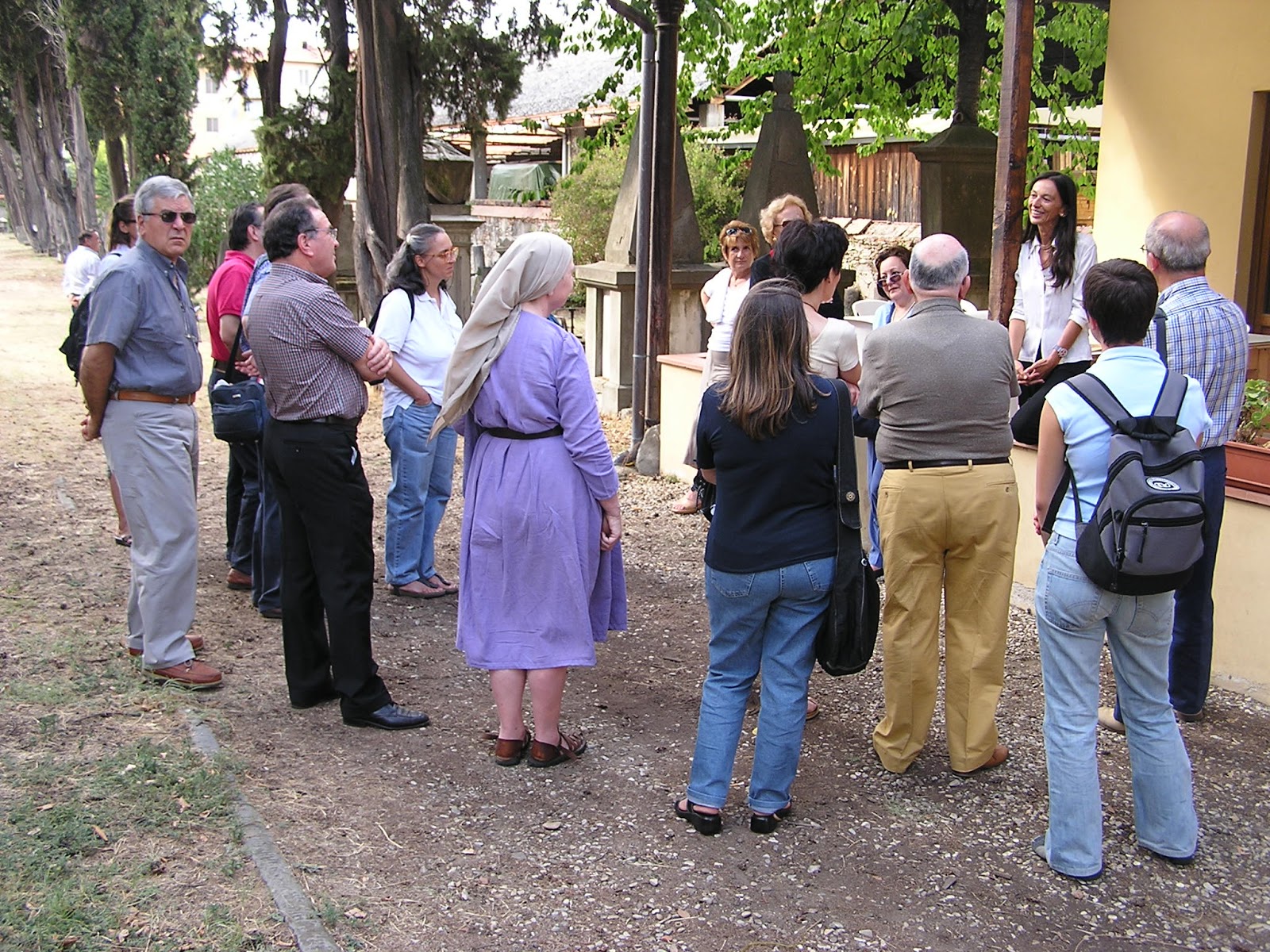
Florence, Italy. Visitors explore the old Jewish cemetery on Day of Jewish Culture. Photo: Samuel Gruber 2003.
Jewish
museums, especially those in already well-visited places – continue
to be among the most popular culture destinations in all of Europe.
Last year Spain’s Sephardic
Museum, in Toledo, attracted more visitors than any
other state-run museum according to a
report released by the Culture Ministry. The museum,
housed in the historic Samuel Ha-Levi synagogue was visited by
295,889 people during the year. High numbers of visitors also
continue for the Jewish Historical Museum in Amsterdam and the Jewish Museum in Prague, both of which are strategically located,
and are comprised of historic and contemporary exhibits housed in
former synagogues. The Jewish Museum in Berlin anchored by the still
popular Daniel Libeskind-designed wing, also attracts large crowds.
Amsterdam, Holland. Visitors explore exhibits at the Jewish Historical Museum. photos: Samuel D. Gruber 2006.
Amsterdam, Holland. Visitors watch video exhibits at the Jewish Historical Museum. photos: Samuel D. Gruber 2006.
It is not clear how the attraction of
these central well-funded museums affects other sites throughout
those countries, but one assumes that the attendance at the museums -
mostly by non-Jews (both observant and non-professing Christians) at
least raises awareness about Jewish religion and culture so there is
greater interest and acceptance about other places. Tracking visitors at smaller sites is less regular. Though one can count those who pay admission and enter those sites that serve as museums, many people come to former synagogues for whatever everyday purpose they may now serve, or for special events, and others only view the buildings from the outside. Despite discussion among professionals for many years, there has not been to my knowledge much effort to systematically count the visitors to Jewish sites - nor to understand who they are, where they come form and why they are interested in a particular place, or in more general aspects of Judaism and Jeiwsh culture. can we expect that a one time visitor to one Jewish site will want to visit others? We just don't know.
Brussels, Belgium. Tour of the Jewish cemetery. Photo: Samuel D. Gruber 2005
In the past, the
incentive of tourism – and tourist euros, pounds, or dollars –
was always part of the enticement to engage municipalities to
support, and even sponsor, Jewish heritage projects. If issues of
cultural diversity, historical accuracy, human rights, and religious
freedom were not potent enough arguments politically to persuade
governments to commit – then the economic argument about the
potential benefits of Jewish heritage preservation could make the
case. Of course, the danger has always been over-promising. Many
good people have invested in Jewish projects and then expected the
tour buses to role in – and they did not – or when they did, the
rolled out just as fast without spending money in the local
community. It is certainly not true that “if you build it – or restore it
– they will come.” Tourism depends on much more than that. It
requires organization, promotion, and adequate infrastructure, as
well as providing a rewarding experience – however that might be
defined.
L'viv, Ukraine. Cultural heritage experts on tour of Golden Rose Synagogue ruin. Photo: Samuel D. Gruber 2008.
The primary use of
any cultural heritage site should ideally be by the local population. When
a synagogue is still a synagogue, this is not a problem. But when it
has been re-purposed, then it is always a challenge to have it regularly used.
A synagogue that is a town library gets good foot traffic - and well behaved, generally appreciative users. A synagogue that is a concert hall, on the other hand, may only be used once a month. Programming should be developed to encouraged to regular use, and return use. Whether
the building has a new static function such as a library or a museum, or
is a venue for changing programs such as exhibits, concerts, lectures and
public meetings, these should be targeted to local audiences so
that the building – and its future – are integrated into the
community.
Outsiders - that is, tourists - should also be welcome. They can add a new dimension, and also elevate a site's status locally. If they are come often they may improve services and informational offerings, and their presence and interest may stimulate new funding support. But not all Jewish
heritage sites, especially cemeteries and small synagogues (or any type of cultural heritage site) can appeal to a large international audience, nor should they. Location can often discourage visitors no matter how important the history.
Nor can many heritage sites stand
alone. To become real destinations instead of just toilet stops,
most Jewish sites, like all heritage sites (museums, castles,
churches, palaces, and the like) need to be part of larger groupings
of sites and activities. Within a town, Jewish sites need to be
promoted as part of the larger town heritage, and as one of the many
inter-related cultural offerings. A Jewish site alone may hold a
visitor for an hour. A Jewish site linked to others, can hold a
visitor for a day or more.
Rural sites must
compete with urban areas that can offer many more experiences. Small
town sites must compete with many other places that are – at least
to the stranger – seemingly similar. And when it comes to tourism,
attracting Jewish visitors is not enough. There just are not that
many Jews. For out of the way places, it may be best to limit visitors to certain
days. These can save money, but more important be compressing the
visitation schedule it may attract more visitors at any given time. A
compressed schedule combined with good programming can help create an
anticipation - an real event - allowing a usually out-of-the-way place
to become, at least for awhile, a real destination.
Samorin, Slovakia. Tour group visit former synagogue, now art center. Photo: Samuel D. Gruber 2009
Alternatively,
stand alone Jewish sites need to be linked in networks Jewish or
otherwise. This allows administration, staffing and promotion to be
shared. In the 1990s we saw Jewish heritage routes developed in
Alsace and Spain, but in the last decade we have begun to see some effective
networks here in Poland, in Slovakia, and in the Czech Republic, and
we will hear more about both these efforts at this conference. Of
course these can all do more, the challenges are great. But
coordinated planning – even of planned variety – is a critical
step for sustained preservation.
Stupava, Slovakia. Jewish heritage route marker on former synagogue. Photo: Samuel D. Gruber 2009.
Stupava, Slovakia. Visitors in the former synagogue. Photo: Samuel D. Gruber 2009.
Once sites are
restored – usually the result of an exceptional effort with
exceptional one-time capital funding - the financial support for
these efforts needs to be varied. Admission can be charged, and
donations (especially from Jewish visitors) solicited. But more
needs to be done. Government cultural agencies and private
foundation will be encouraged to support operations when costs are
efficiently shared. A single administrator can care for many sites,
and single programmer can arrange events for a whole network of
venues. Partnerships with international Jewish communities,
Federations or individual synagogues or museums should also be
explored. There is a long tradition of this sort of pairing and
assistance, though its seems much diminished in recent years –
perhaps in favor of the greater reach of web presence, social
networking and the promise of wider internet outreach and fund
raising.
For those of us
who spend so much of our lives immersed in the business of Jewish
heritage, we start to think that perhaps we are overdoing it. How
many restored synagogues or Jewish museums does the world really
need? But in fact, compared to all cultural heritage sites, the
number of accessible Jewish ones remains extraordinarily small.
Prague, Czech Republic. Tourist line up outside Pinkus Synagogue. Photo: Samuel D. Gruber 2004
Rome, Italy. Visitors at the Jewish Museum. Photo: Samuel D. Gruber 2004
The opportunity to
visit a Jewish site and learn something of Jewish history, religion
and culture is, for most people, still a rare opportunity. There are
many more art and science museums, churches and palaces, parks and
nature centers, and many other types of destinations. Jewish
heritage is what we call a “niche” attraction. What it loses in
popularity because it is not well-known and mainstream it can gain
for exactly those same reasons.But it is important that when visitors come because a place is different or even exotic, they leave knowing more about Judaism and Jewishness.
I've been tracking the fate of Jewish heritage sites for more than twenty years. Looking
back, the results,
when they can be calculated, are quite impressive. The ultimate
purpose of the protection and preservation of Jewish heritage sites
should not be to create tourist centers; we are not in the
entertainment business. Still, the success of of any preservation project - its initial
support and funding, and its long term use and maintenance - may often
depend on the amount of sustained interest it can attract. When
planned wisely, Jewish communities, organizations and educators can tourists' interest to teach and inspire.
.jpg)


.jpg)


 Posts
Posts